分类 Other 下的文章

December 28 news: on the morning of May 23, 2019, China launched the remote sensing 33 satellite with the long march 4C carrier rocket at the Taiyuan Satellite Launch Center. The third stage of the rocket and the debris of the satellite fell, so the satellite launch was declared a failure.

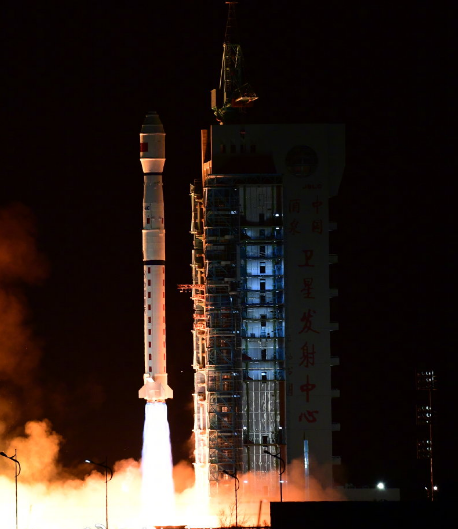
According to CCTV news, at 23:44 on December 27, 2020, China successfully launched the remote sensing 33 satellite into the predetermined orbit with the long march 4C carrier rocket at Jiuquan Satellite Launch Center, and the launch was a complete success. At this point, China's space industry has a perfect ending in 2020.

rs-33 satellite

It is worth mentioning that the mission also launched a micro nano technology test satellite.

China's successful launch of rs-33 satellite brings China's space industry to a perfect end in 2020.

Remote sensing satellite 33 and micro nano technology test satellite are mainly used in scientific experiments, land and resources census, agricultural product yield estimation, disaster prevention and mitigation and other fields. This mission is the 357th flight of long march series launch vehicles.

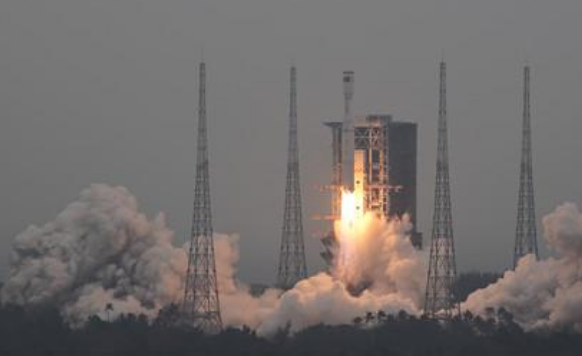
At 12:37 on December 22, the first flight test of Long March 8, a new medium-sized carrier rocket developed by China, was successfully carried out at Wenchang space launch site in Hainan. The rocket flew normally and the test was successful. The successful first flight of Chang-8 rocket will fill the gap of China's 3-4.5-ton carrying capacity in sun synchronous orbit and lay a solid foundation for the development of China's reusable launch vehicle.
Long March 8 successfully fills

At 12:37 on the 22nd, with a loud noise, the Long March 8 carrier rocket made its first flight at Wenchang space launch site in Hainan, successfully sending five satellites into the scheduled orbit.

As a new generation of China's launch vehicle, the long march eight is about 50 meters long and takes off about 360 tons. The green liquid propellant is developed according to the modular combination idea, which fully absorbed the research results of the in service and new generation launch vehicles, and has good inheritance, advanced nature, adaptability and economy. Mu Yu, director of the overall design department of the first Academy of China Aerospace Science and Technology Corporation, introduced that the Long March 8 rocket is mainly used to launch the sun synchronous orbit (SSO) satellite, and takes into account the launch capacity of low earth orbit and geosynchronous transfer orbit. It will fill the gap of China's 3-4.5-ton carrying capacity in sun synchronous orbit, which is of great significance for accelerating the upgrading and upgrading of launch vehicles. "Through the minimum cost: the development cycle is very short, and the formal project development (has) for two or three years, we can form combat effectiveness. It is equivalent to the improvement of our carrying capacity in the sun synchronous orbit, and it can make up for some gaps in our previous orbit (capacity), and also carry out the non-toxic and pollution-free update of the power system.

Of course, the launch of new launch vehicles is bound to be accompanied by some risks and challenges. On the eve of the test launch, the launch mission originally planned to be carried out on the 20th was delayed due to environmental factors such as high-altitude wind. The reporter learned that due to the compact structure and light weight of the new launch vehicle, the flight attitude has very high requirements for the protection of high-altitude wind environment. Pan Hao, chief designer of the Long March 8 rocket control system of the first Academy of China Aerospace Science and technology group, further explained, "because of the typhoon's transit, its method is to identify and control (the mode). That is to say, the wind must blow first. I feel the wind coming, and then I will produce corresponding actions to offset such a way. But when the wind is really very strong and fast, the rocket has no time (reaction) and can't react. Because unlike other small aircraft, the arrow is more sensitive. The rocket is bigger, it moves more slowly. When the wind changes faster than the rocket, it is impossible to make a very timely and effective response.

It is understood that the Long March 8 launch vehicle is China's first commercial launch vehicle approved by the state. While carrying out low-cost electrical and structural design, it may be reusable in the future through vertical takeoff and landing research. Mu Yu said, "in the future, the Long March 8 will be further optimized for commercial launch, including the optimization of technical solutions, so that its launch cost will be lower. We will also try to carry out the verification and exploration of reuse technology, further reduce the cost and threshold of our access to space, making it possible for us to launch a large number of missions. "

Compared with the past, the engine throttling technology has been adopted for the first time in the Long March 8 launch vehicle, which aims to optimize the rocket's carrying capacity to the greatest extent and lay a foundation for the recovery of the following core stage engines.

It is reported that this mission is the 356th launch of the long march series launch vehicles.

On December 16, Huawei launched the beta version of Hongmeng OS 2.0 mobile phone system as scheduled. P40 and mate 30 series can apply to participate in the test, mainly for developers.

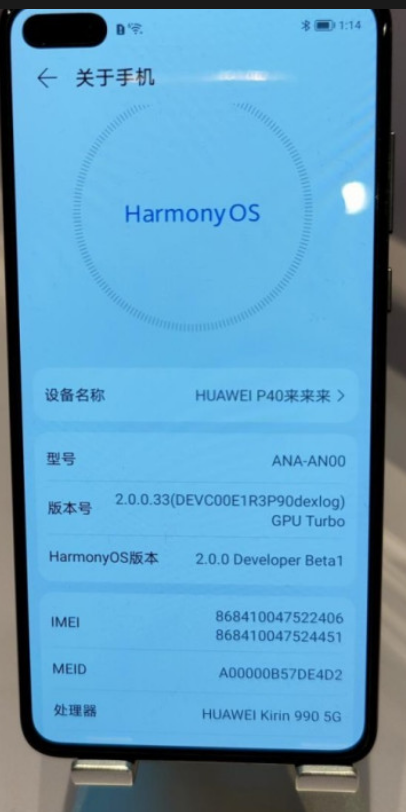
At the press conference, Huawei displayed Huawei mobile phones that have upgraded Hongmeng OS to demonstrate the features of Hongmeng OS. From the experience point of view, this mobile phone is not different from the current emui developed by Huawei based on Android in terms of operation habits and interface design. In addition, Android apps can be freely downloaded and run in the built-in Huawei app store.

Hongmeng OS official version

According to sina science and technology report, a field staff member said that the demonstration machine is only to show the distributed ability based on Hongmeng OS. The official version of Hongmeng OS in the future will definitely have a new interface design on mobile phones.
Many developers and media participating in the December 16 harmonyos 2.0 mobile phone developer beta event said that there are many differences between Hongmeng OS and Android system from the perspective of Huawei's relevant technical experts and on-site display functions.

According to Wang Chenglu, President of Huawei's consumer business software, "over the past five years, Huawei's software team has basically replaced the core parts of Android system From the underlying driver to the abstract layer of hardware, to the programming framework above Huawei, etc. We have changed everything we can.

Wang Chenglu has repeatedly stressed that Hongmeng OS was born not to replace Android, but to surpass Android and build the next generation operating system in the era of Internet of things

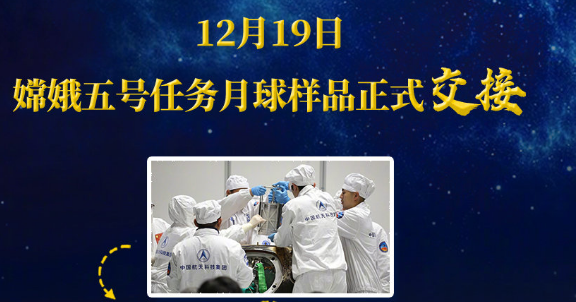
According to Xinhua news agency and others, some lunar samples collected by chang'e-5 were officially handed over. The lunar samples weighed 1731g. This also marks the beginning of China's first work on the storage, analysis and research of extraterrestrial objects, and the chang'e-5 mission has shifted from engineering implementation to scientific research.

chang'e-5 were officially handed over

The lunar samples brought back by chang'e-5 will be used for three purposes: first, scientific research; second, it will be displayed in the National Museum of Tibet for popular science education; third, according to international cooperation conventions and multilateral bilateral cooperation agreements, the lunar samples and data management measures will be shared with relevant scientists, and some samples may be sent as state gifts according to international practices.

There are many important roles in the study of lunar samples. It is of great significance to study the lunar surface interaction and lunar soil texture. The lunar sample stock is only 1731g, and part of the Lunar Sample for research purposes is unknown.
According to Zou Yongliao, director of the General Department of lunar and deep space exploration of the Chinese Academy of Sciences, it is of great significance to study the composition characteristics (rock type, mineral composition, chemical composition, etc.) of the sampling area, the interaction between lunar surface materials and solar wind, and the pedogenic mechanism of lunar soil.
In addition, according to the actual composition characteristics, if the collected samples are or produced from ancient plagioclase materials, it is also of great scientific value for the study of the early history of the moon; if the collected samples have or come from the basalt of the moon sea, it is of great value to the study of the lunar volcanism and even the thermal history; if the collected samples have the composition of impact breccia, they are of great scientific value to the study of the early history of the moon It is of great value to study the impact effect of the ball.

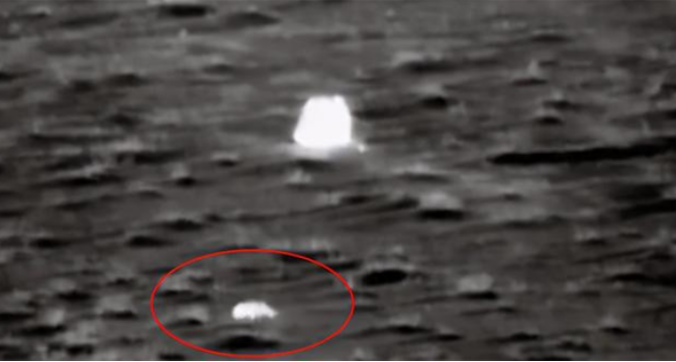
Good news in the morning! At 1:59, the lunar exploration project chang'e-5, carrying lunar samples, landed at Siziwang Banner landing site in central Inner Mongolia, marking the successful completion of China's first mission of sampling and returning extraterrestrial objects.

At about 1:00 a.m., Beijing aerospace flight control center injected high-precision navigation parameters into the chang'e-5 orbiter and reentry vehicle combination through the ground TT & C station. After that, the orbiter and the reentrant are usually unlocked and separated from the South Atlantic sea level at an altitude of about 5000 km, and then the orbiter completes the evasion as planned.

chang'e-5 landing

At 1:33 a.m., chang'e-5 entered the earth's atmosphere at a speed close to the second universe speed (about 11.2 kilometers per second), about 120 kilometers above the ground, and performed the first aerodynamic deceleration. After falling to a predetermined height, the retractor jumps out of the atmosphere and begins to slide downward after reaching the highest point. After that, the reentrant enters the atmosphere again and performs a second aerodynamic deceleration. When it descends to a height of about 10 km above the ground, the retractor opens the parachute to complete the final deceleration and maintain a stable attitude, and then lands smoothly in the predetermined area. The technicians who are responsible for the measurement, control and recovery of the search and recovery tasks will find the targets in time and carry out the recovery work in an orderly manner.

On December 3, the lifter ignited and took off and entered the orbit precisely. The rendezvous, docking and sample transfer with the orbiter and the reentrant assembly were completed on December 6. After that, separation and controlled lunar landing were carried out as planned. From December 12 to 16, the combination of the orbiter and the reentry vehicle separated from the orbiter and returned to earth on December 17 after completing two monthly earth transfer incident and two orbit corrections.

According to the plan, the recovered chang'e-5 reentrant will be airlifted to Beijing to open the cabin after completing the necessary ground treatment work, and take out the sample container and cargo. The National Space Administration will hold a handover ceremony at the right time and formally hand over the lunar samples to the ground application system. The first work related to the storage, analysis and research of extraterrestrial objects in China will also be started.

免责声明
本博客部分内容来自于互联网,不代表作者的观点和立场,如若侵犯到您的权益,请联系[email protected]。我们会在24小时内进行删除。