分类 Other 下的文章

   Since 2011, the Australian branch of the Swedish Space Research Center has signed a cooperation agreement with China, agreeing to let a satellite station in the country provide support for China's space exploration science projects.

   But the center recently announced that they will not renew the contract with China after the contract expires.
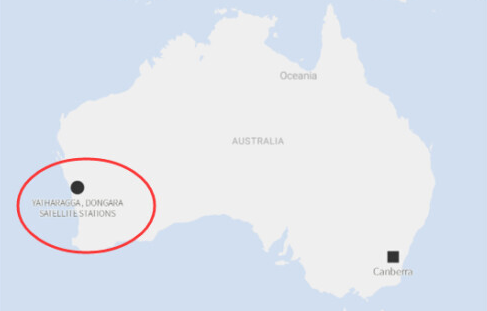
Australian satellite station stop serving China

   According to Reuters, this satellite station owned by the Australian branch of the Swedish Space Research Center (SSC) is located in Western Australia, Australia. Since 2011, this satellite station named Yatharagga has signed a cooperation agreement with China, and provided technical support to the Chinese Shenzhou 10 spacecraft in 2013.

However, the center recently stated in an email to the media that the Chinese market has become complicated due to the geopolitical situation, so the center has decided to focus on other markets in the next few years, and will not focus on China. Continue to renew after the expiration of the contract.

   However, the center did not disclose when their contract with China will expire. Australian officials and Chinese officials have not yet responded to Reuters interviews on the matter.

   On the other hand, judging from the Reuters report on the incident, the Western media seems to think that the incident may be Australia's help in fighting China.

It is worth noting that this "Yatharagga" satellite station is in close proximity to another "Dongara" satellite station. The latter is owned by the US branch of the Swedish Space Research Center and is exclusively provided for US government agencies including NASA and other commercial partners. service.

   It is understood that the space tracking station mainly refers to the satellite ground station that establishes contact with the spacecraft, and will provide multiple technical support such as telemetry, tracking, and command for the spacecraft to and from space. my country successfully completed the space docking test of the Shenzhou 10 mission in June 2013, with the help of SSC's Australian Space Tracking Station. This shows that the resources invested by China in renting ground stations have paid off.

   In fact, China's satellite ground station technology is also very strong. Among them, the remote sensing satellite, as a member ground station of the International Resource Satellite Ground Station Network, ranks first in the number of satellite signals received and processed by the global ground station. Just add more ground stations, the satellite signal accuracy will be more accurate.
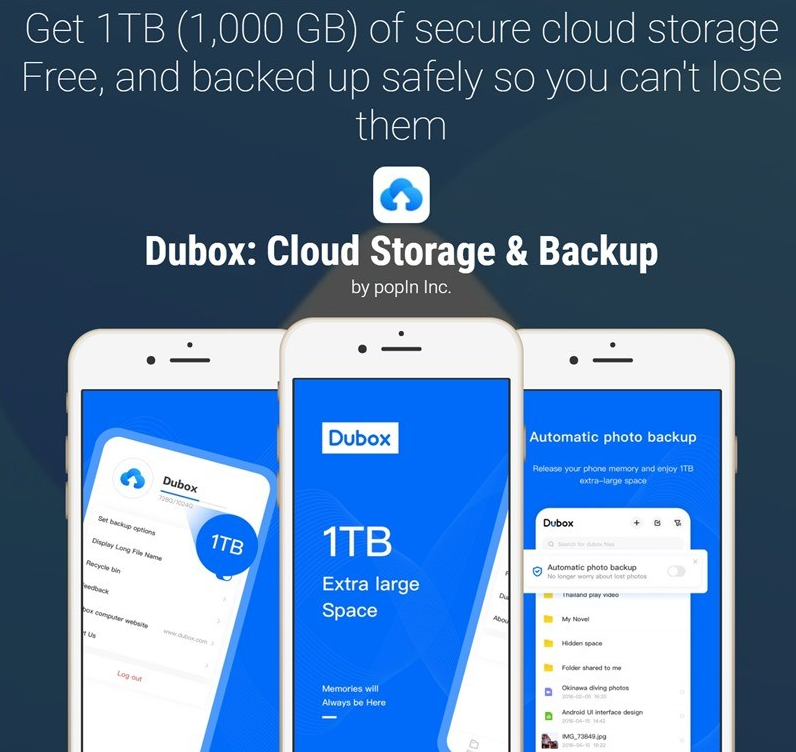
Baidu’s company PopIn has launched Dubox, an online storage product for foreign users. Registration can get 1TB of free capacity and unlimited upload and download speeds.

online disk Dubox

Dubox does not seem to have a speed limit, and the measured download speed can reach 33MB/s.

However, the service is only for overseas users, and IP access from mainland China is prohibited. The access will show that the current area is not available.

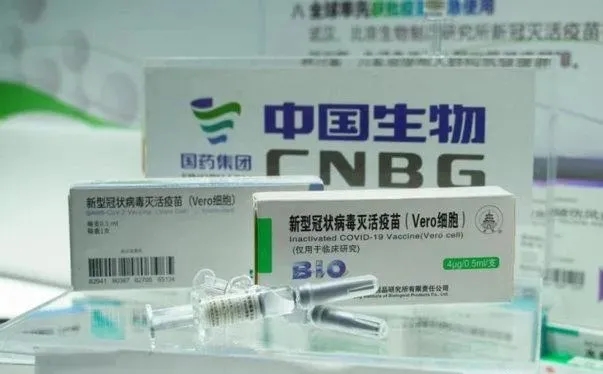
In an interview with the media on the emergency use of the new crown inactivated vaccine and overseas phase III clinical research, the head of Sinopharm China Biotechnology revealed that the two new crown inactivated vaccines developed by Sinopharm China Bio have been vaccinated for hundreds of thousands of times, and none of them is obviously bad. In response, no one was infected; among them, tens of thousands of people who went to overseas high-risk countries and regions after the vaccine had no infection so far.

mmexport1599921673874.jpg

   Zhou Song, the general counsel of Sinopharm China Biotechnology, said that three domestic new crown inactivated vaccines have been approved for clinical trials, and Sinopharm China Biotechnology accounts for two of them. It is currently the largest emergency vaccination and the largest number of people. Zhou Song emphasized that the more important thing is that the emergency use of the new crown inactivated vaccine is aimed at people with high risk exposures, such as medical staff who treat people infected with the new crown virus, as well as diplomats and foreigners going to high-risk countries. Dispatch employees and Chinese-funded enterprises "Belt and Road" construction personnel and so on. These tens of thousands of people have been overseas for a few months after being vaccinated. Among them, in the areas where the epidemic broke out, some left-behind employees were infected but they did not. Parallel control data like this is available in multiple countries, which proves the effectiveness of the vaccine.

  , Zhang Yuntao, vice president of Sinopharm China Biology, said that phase I and II clinical studies of the new crown inactivated vaccine were carried out in China, and neutralizing antibodies were produced. "Neutralizing antibody testing is the gold standard." In overseas Phase III clinical studies, neutralizing antibodies will also be continuously observed. Neutralizing antibodies are comparable. Overseas trials have expanded races, countries, and populations, and most importantly, they have been recognized overseas, which will be better for future applications.

   Zhang Yuntao said that in the past, it was difficult for our vaccines to be exported. There were a series of regulations and clinical restrictions. Now that our scientific and technological strength is strong, the data of phase I and II clinical trials are recognized overseas, and the direct development of phase III clinical research overseas is a model of international cooperation. In the future, if China's approval is passed, as long as these countries do clinical research, they can also be legally listed on the market. He revealed that at present, there are 500 million doses of intentional orders for the new crown inactivated vaccine in the world.

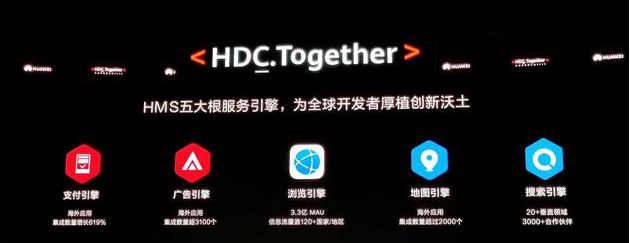
Huawei also released EMUI 11 equipped with Hongmeng distributed technology.

On September 10, during the Huawei Developer Conference 2020, Huawei officially released version 2.0 of the Hongmeng system.

Huawei Consumer Business CEO Yu Chengdong said that in December this year, the Beta version of smartphones will be released for developers, and the mobile phone version of the Hongmeng system will be released. Next year, Huawei mobile phones will fully support Hongmeng 2.0. Since then, terminal equipment such as Huawei mobile phones and tablets will be connected to the Hongmeng system one after another.

Huawei Hongmeng 2.0 reveals

At the same time, Hongmeng System has also taken the first step to empower the third-party ecosystem, which is to integrate a series of platforms and platforms including source code, SDK, development board/module, Ark compiler, full-scene development framework, etc. The tool chain is open to hardware and software manufacturers to help developers quickly develop equipment and software based on the Hongmeng system and improve the Hongmeng ecosystem.

In terms of hardware, Hongmeng has cooperated with some home appliance manufacturers. Home appliance manufacturers including Midea and Joyoung will soon release home appliances products based on the Hongmeng system. These home appliances will be connected with the data on the mobile phone in real time to achieve synergy for consumers. Provide more personalized service.

Wang Chenglu, Huawei’s Consumer Business Software Department, stated that from September 10, the Hongmeng system will be open sourced for 128KB-128MB terminal devices such as large screens, watches, and car machines. In April 2021, it will be open sourced for memory 128MB-4GB terminal devices. After October 2010, it will be open sourced for all devices above 4GB.

In addition, Huawei also released EMUI 11 equipped with Hongmeng distributed technology. In addition to design style and interaction upgrades, EMUI 11 will no longer be limited to interactions between mobile phones, but also to realize interactions between devices equipped with the Hongmeng system, such as mobile phones and tablets, mobile phones and smart homes.

Wang Chenglu said that from September 10th, EMUI 11 will officially open Beta, and mobile phones using EMUI 11 can upgrade Hongmeng OS 2.0 in the future. Beginning next year, Huawei's mobile phones may fully enter the Hongmeng era.

  In the first half of this year, Huawei further consolidated its position as the world's largest manufacturer of communications infrastructure equipment.

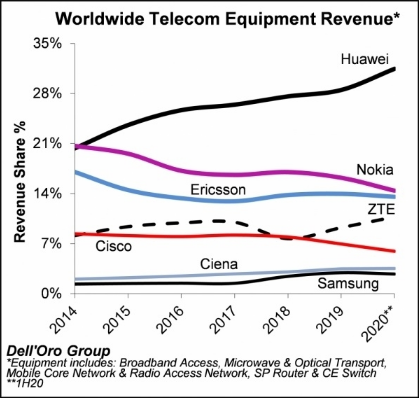
  Statistics from the Dell'Oro Group show that after covering the mobile core network, wireless access network, broadband access, microwave and optical transmission, carrier-grade routers and customer edge switches and other communication equipment, the first half of the year ended. The revenue share is as high as 31%, an increase of 3 percentage points over the same period last year.

  Although Nokia (after merging with Alcatel-Lucent) ranked second, its revenue market share was only 14%, a drop of 2% year-on-year.

   In fact, after surpassing Nokia for the first time in 2015, Huawei has been widening the gap with it. The report attributed Huawei's impressive performance to its large participation in domestic 5G construction, while Nokia has nothing worth mentioning in this market.

huawei 5G  widening the gap

  Huawei sits firmly as the world's largest communications equipment manufacturer: widening the gap with the second Nokia

   3~7 were Ericsson, ZTE, Cisco, Ciena, and Samsung, among which Ericsson’s share was the same as last year, at 14%. ZTE increased by two percentage points year-on-year to 11%.

   Of course, Huawei, Nokia, and ZTE are all involved in wireless and wired devices, Ericsson focuses on wireless devices, and Cisco and Ciena mainly focus on wired devices.

   If you look at the 5G equipment market alone, Huawei still ranks first with a share of 35.7%, followed by Ericsson with 24.6%, Nokia 15.8%, Samsung 13.2%, and ZTE 9.3%.

  Huawei sits firmly as the world's largest communications equipment manufacturer: widening the gap with the second Nokia

免责声明
本博客部分内容来自于互联网,不代表作者的观点和立场,如若侵犯到您的权益,请联系[email protected]。我们会在24小时内进行删除。