分类 Other 下的文章

On December 24, according to foreign media reports, Charles Peng, Huawei ’s Indian consumer leader, said: “Huawei has its own HMS (Huawei Mobile Services) and is trying to build a mobile ecosystem. Most key applications, such as navigation, Applications such as payments, games and messaging will be ready. "

According to the report, Huawei has about 1 million registered developers of HMS worldwide, a global fund of $ 1 billion, and offers up to $ 17,000 in rewards for integrating applications with HMS in India.

It is reported that Huawei previously released the first flagship model that cannot be equipped with GMS (Google Mobile Services)-Mate 30, which means that it will not be able to pre-install Gmail, Youtube, PlayStore and other commonly used overseas software. In response, Huawei has launched HMS, and 45,000 apps have adopted HMS cores.

He Peng said that consumers will not find any difference between GMS (Google Mobile Services) and HMS, and we focus on working with developers and providing a good customer experience. Huawei headquarters is in contact with Chinese developers, and the Indian developer base will provide assistance in India and Europe. In each country, we will work to provide customers with 100-150 top applications through HMS.

Earlier, at the AFA Huawei Communication Conference in Germany, Yu Chengdong said that if Android is not allowed, consider using HarmonyOS. The first mobile phone equipped with the Hongmeng system may be the P40 released in March next year. At the same time, it will quickly allow application developers to migrate from Google applications to Huawei's HarmonyOS applications.
Redmi notebook product
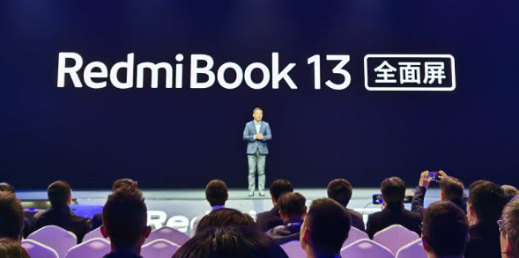
Xiaomi's brand Redmi held a new product launch in Beijing. In addition to the K30, Redmi also released its first 13-inch notebook product, the RedmiBook 13.

This time the RedmiBook 13 focuses on the concept of thin and light and full screen. The entire A / C / D surface is made of metal. The body weight is 1.23kg, and the basic version (excluding the independent graphics card) weighs only 1.19kg.

The RedmiBook 13 uses a 13.3-inch 1080p Full HD anti-glare screen with ultra-narrow sides on all sides. The official screen ratio figure reached 89%. When there is no more room for narrowing the left, right, and upper borders of the screen, RedmiBook 13 challenges the width of the lower border and uses Bent180 ° packaging technology to fold the screen circuit board to the back of the screen to further reduce the width of the lower border to 9.96. mm.

In terms of hardware, the RedmiBook 13 is equipped with Intel Core 10th generation 14nm ++ processor, there are two versions of i5 and i7, respectively using i5-10210U and i7-10510U processors, and it has an independent graphics card NVIDIA GeForce MX250.

In terms of battery life, it is equipped with a large 40Whr battery, which can provide users with a long battery life of up to 11 hours. It also supports 1C fast charge technology, which can charge up to 50% in 35 minutes.

In terms of ecology, Xiaomi also emphasized the file transfer experience between mobile phones and notebooks, notebooks and laptops at the press conference. Through the "Smart Interconnect" application, file sharing and interworking between Xiaomi mobile phones and notebooks can be easily completed.

In terms of price, the RedmiBook 13 has three versions, of which the i5 version of the integrated display is priced at 4,199 yuan, the i5 version of the independent display is priced at 4,499 yuan, and the i7 version of the independent display is priced at 5,199 yuan.

Netease Technology News, November 14 news, yesterday afternoon Alibaba Group submitted the initial prospectus documents on the Hong Kong Stock Exchange website, Alibaba said it will ring the clock in Hong Kong on November 26.
Alibaba
According to the prospectus, Alibaba will issue 500 million new shares of common stock through the global offering and will be listed on the main board of the Hong Kong Stock Exchange.

According to sources, the first day of the Alibaba International Placing has been fully subscribed. According to the sales documents, Alibaba issued 500 million new shares, raising up to US$11.7 billion (approximately HK$91.26 billion). If it takes into account 15% or 75 million shares of over-allotment shares, it will raise a maximum of US$13.4 billion (104.52 billion yuan).

According to sources in the investment community, Ali has no current offer price and no discount offer. The company will decide the offer price on November 20th according to its US ADR closing price and the international placement's subscription response.

According to the investment community, the current international placements are overwhelming and therefore there is no discount, and the pricing of international placements has a higher chance of being offered than the public offering.

According to the latest news from the official website of the Ministry of Science and Technology, on November 3, the Ministry of Science and Technology, together with the Development and Reform Commission, the Ministry of Education, the Ministry of Industry and Information Technology, the Chinese Academy of Sciences, and the Natural Science Foundation, organized a 6G technology R&D work kick-off meeting in Beijing.

The meeting announced the establishment of the national 6G technology research and development promotion working group and the overall expert group. The promotion working group is composed of relevant government departments, and its responsibility is to promote the implementation of 6G technology research and development; the overall expert group consists of 37 universities, research institutes and enterprises. Experts are responsible for proposing 6G technical research layout proposals and technical demonstrations. This marks the official launch of China's 6G technology research and development work.

The reporter learned from Visa on the 5th that Visa will cooperate with Tencent to provide WeChat payment services for international Visa cardholders.

Yu Xueli, President of Visa Greater China, said on November 5th, “We are very pleased and excited to cooperate with Tencent for overseas cardholders to use WeChat payment when traveling in mainland China. Visa believes that this is not only It is good news for consumers who come to travel in mainland China, and it is also an exciting news for the entire payment industry. In a global business environment, only through collaboration can consumers be seamless and smooth. The payment experience. Visa is very pleased to work with innovative and leading local financial technology companies like Tencent to provide a safe, convenient and connected mobile payment experience for international visitors to China. Our cooperation means Overseas Visa cardholders will be able to use their Visa cards in thousands of merchants that can accept WeChat payments in mainland China, instead of relying on cash."

免责声明
本博客部分内容来自于互联网,不代表作者的观点和立场,如若侵犯到您的权益,请联系[email protected]。我们会在24小时内进行删除。